A MIX OF THE ESTABLISHED AND THE INNOVATIVE
I'm a little late in getting this out. ICFF, the International Contemporary Furniture Fair, was held at the end of last month at the Javits as part of NYCxDesign, a week-long event promoting the design industry in New York City.
Events were held throughout all the boroughs of the city but the culminating event and the granddaddy of the week is ICFF. This was ICFF's thirtieth year in a rollercoaster of up and down successes and failures. It's experienced years in event.
There's always an evolution with any event and ICFF is no different. When I first started going to ICFF it was more of a launching pad for new designers trying to introduce and establish their brand. The hope was to draw interest from exclusive furniture showrooms in order to get representation and a means of exposure and then sales.
The big boys with huge names weren't the guiding force at the show. Things have changed and now manufacturers like Bernhardt take up large swathes of real estate. I'm not sure if this is a good thing or not.
But there's no denying that Bernhardt has something to say. I loved this new line they were promoting done by designer Terry Crews
For some reason foosball seems to always have a presence at ICFF. I've never installed one for a client at any of the projects we've worked on. I have never had a client call out for one but there were at least a half dozen of these game pieces spread throughout the aisles of the Javits. This one by Teckell for Italian Luxury Interiors was one of the more interesting. Maybe our problem in getting a request for one of these is we don't' do enough real luxury projects for this to come up as a request.
Talk about the elephant in the room...I didn't stop long enough to question the students from Drexel University about their design for a sponsored competition by Westphal but if the competition had the words, "animal inspired" in it this chair snorted up all the peanuts. Year after year the design school section of the show seems to grow and I think this is a good thing
The show can really be a touchy feely experience. You only have to look at the elephant chair to understand the desire to run your hand over the product or in that case the "pet" chair. Innovative materials are always a big draw at the show. Eugene Stoltzfus' cork furniture demanded a swipe of the hand
I'm stuck on an animal theme here as Konekt introduced their Adam's Family "Thing" stools composed of coarse horse hair bound with brass rings. I'm not sure how I feel about these stools but I love Konekt's creativity and design sensibility.
Arturo Alvarez's human light forms made from spun Japanese cord have both an eerie and ethereal feel. They seem like alien life forms bending in anthropomorphic positions appearing to observe us in ways that are both scary and compelling
Copper also made a return as the old but new metal material of choice. These beautiful copper pendants by Original BTC a British lighting manufacturer gave off a very comfy warm light.
This organic chandelier, The Bijout, by Luxe has been on my wish list for the past year. It's branch like structure complete with raindrop crystals make for an amazing signature piece for over a dining table
Technology usually just frightens me but I thought this entry by Flow Architech was brilliant. The idea isn't that hard to explain. A track is installed in the ceiling. In the track is a rod with a monitor attached to the base of the rod. The monitor can then travel through space so it can either hid in a cabinet or be used wherever the track allows the monitor to go. The monitor can also swivel so you can turn it around. All this is done be remote control. The monitor attached to this system was two sided making it capable of having different videos playing on either side. I wish I had made a video of this one showing its movement potential. It was my favorite find of the event.
There's no way I could not include my friends at Kravet without a shout-out to their new entry, CuratedKravet. Known for its prominence in the fabric industry, then having taken a gigantic leap into the furniture market they're now taking over the accessory share of the industry making them a full service vendor. They've always been known for their fine design and they do it all at below market pricing.
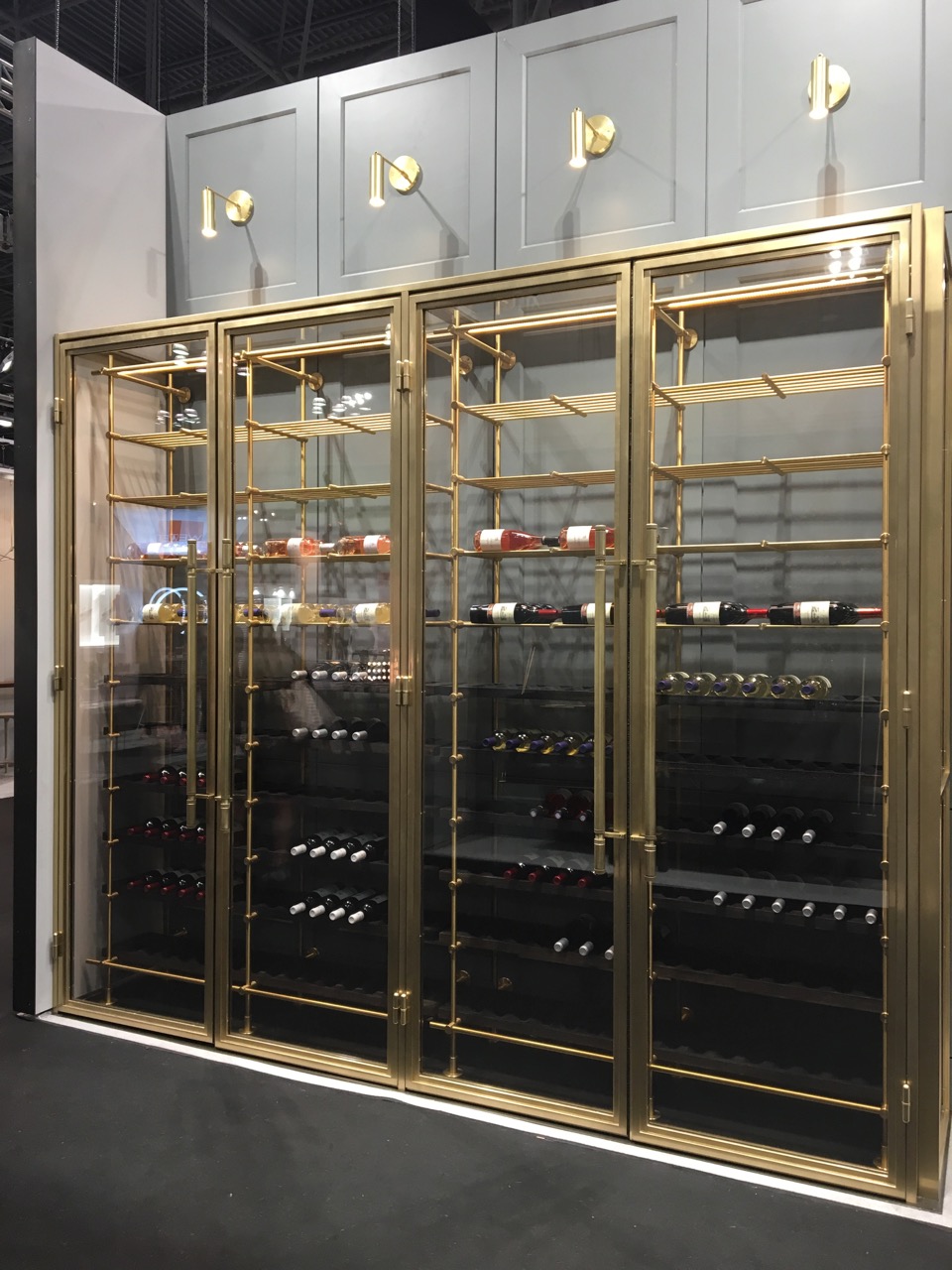
I love this system of wall units, bookcases and connected furniture by Amuneal. The system is modular and seems to float away from the wall. There's an abundance of metal and wood finishes to choose from.
It's almost like an auto-pole system similar to what you'd see in a photographer's studio assembled with pieces that begin to look like plumbing supplies on a very high level
And when I say high level the applications can satisfy any high roller
I can't tell you exactly what Allied Maker makes but one thing they produced at the show was some exquisite music. It was the perfect interlude with an etude. It 's always a must for us to walk the aisles of the Javits for ICFF. There are the repeaters but there's always something new that you don't want to miss.
THE GALLERY
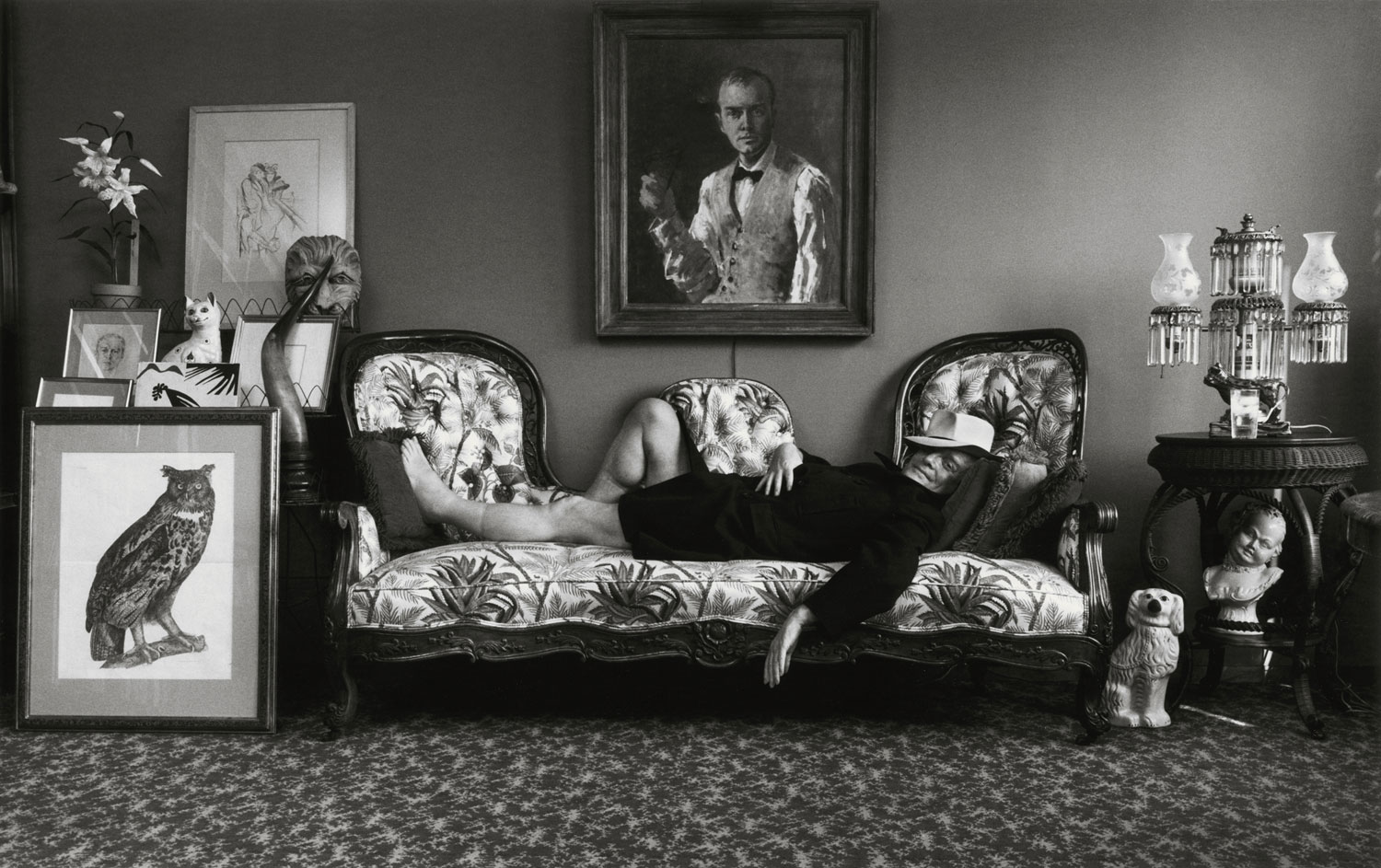
Truman Capote, writer, New York 1977
Arnold Newman, photographer
Represented by Howard Greenberg Gallery, New York
Thursday, June 8, 2017
Saturday, June 3, 2017
DALE CHIHULY AT THE NEW YORK BOTANICAL GARDENS
GLASS AS ART IN A HISTORIC GARDEN SETTING
It's been over ten years since a major garden exhibit of Dale Chihuly's work has appeared on the American landscape and it couldn't have happened in a more picturesque and accommodating setting than the New York Botanical Gardens.
Pulling off an exhibit of this nature is not an easy task. Our neighborhood garden in Madison has tried for several years to pull of an illuminated artscape, unfortunately, not with great results but the New York Botanical Gardens has come up with a way to do it right.
First, and most obvious, is to hire an artist of the caliber of Dale Chihuly. His work has the resonance of greatness. He's a master glass blower and his pieces have become synonymous with his name.
Second, is having a setting that could feed off the artist's imagination. Each piece throughout the garden was designed specifically for the place it inhabits. The work wasn't created in a vacuum. It was created for the exact space it occupies in the garden
Third, is know how to execute pieces that are both dramatic in the sun, the shade and at night with perfect lighting
Fourth, is to accompany the event with music, entertainment and food that give visitors an excuse to spend money and time beyond walking the paths of the garden
The Chihuly exhibit runs from now until the end of October, 2017. The gardens are open every day except Monday. The evening events are on a schedule of Saturdays only April 29-June24, Thursdays July-August and then Thursdays-Saturdays September until the end of October. The nights are the best ticket. They run from 6:30-10:30. If you want to get the full effect come early so you can see the pieces in the daylight but stay until the sun has gone done and then retrace your steps, a glass of wine in hand, so you can see all the pieces once again under the lights.
Pick up a map when you enter. No matter when you go you have to pay. This garden isn't free. A little tip: get your ticket online. It saves standing in line at the Gardens where the line for on sight tickets can add another thirty minutes onto your visit
Without a map or my sheer determination I might have missed some of the pieces. I almost didn't enter the Enid A. Haupt Conservatory. I didn't realize it was open until I saw couple try the door and walk inside. I thought I could walk through to the other side to see the pieces in the courtyard only to discover that the interior of the Conservatory held a whole slew of additional pieces.
Once past the entrance gate
you walk under a trio of hanging Chihuly pieces as you hand your entry ticket to the gatekeeper
Then I was immediately hit by the sounds of a mariachi band shaking its maracas mixed with the sounds of brass horns and the ivory and ebony keys of an accordion.
Through the amplified music I could see the garden's iconic clock lit like a prop from Alice in Wonderland
Just behind the clock was the first Chihuly piece, Red Reeds on Logs.
Tall red reeds of glass pierced the sky above and with their reflections the pond beneath
But it was once the sun descended that the illuminated beauty of the red reeds and logs took center stage at the initial hub of the garden.
If you go to the right of the red reeds down the lane past the children's garden you end up at a lazy pond tucked within the native plant section of the garden.
Floating on a wooden skiff are a bounty of captured glass buoys.
Glass orbs cupped in a wooden tray appear like a kid's marble collection on a gigantic scale.
Glass panels stand as a backdrop for the floating aquatic orb tableaux using the sun's natural light to form reflections on the water's surface and transition to a light show at night as artificial lights play with the colored panels
As visitors wandered the grounds during the special evening events there were surprises that weren't forewarned on any paper handout
3
Troupes of street performers also roamed the garden and we were lucky to catch this acrobatic dance group's performance that ran into the pavilion next to the pond and then ran off as quickly as their performance ended
It's hard to stroll through the Botanical Gardens without taking in the bucolic beauty that surrounds you every step of the way
From roses and rhododendrons
to conifers that might be just as at home if they were lining the Pacific Coast.
I took a refreshing walk though a stand of birches
The gardens provided a setting that even a little chipmunk could enjoy
All of this terminated in the Arthur and Janet Ross Conifer Arboretum with a piece Chihuly titled "Sapphire Star", a spherical burst of blue and white spears.
There's a grand European-esque approach to the Mertz Library and I'm not talking Fred and Ethel. The Library hosts a retrospective of Dale Chihuly's work.
The fountain in front of the neo-Renaissance style building was designed by Carl Tefft in 1905. It is titled the "Fountain of Life" and on its own it is pretty impressive but add Chihuly's "Blue Polyvitro Crystals" and you have competition for any of Rome's iconic fountains.
"The Fountain of Life" demanded a second look once the lights came one around eight-thirty and the sky had turned a deeper blue just before hitting the dark shades of midnight blue. That's when the crystals seem to explode from the water like giant chunks of ice.
Prior to getting to the Haupt Conservatory there are a series of formal gardens that required a little detour. Designed with geometrically cut boxwoods and potted fruit trees the formality of these gardens is a striking contrast to the more organic parts of the garden. You need to get to this one before the sun goes down. They don't light these gardens at night but even the absence of light can't dim the fragrance of these beautifully laid out perennial and herb gardens.
The Haupt Conservatory sits on the edge of the gardens, a Victorian glasshouse structure playing home to miles of exotic plants and much of the Chihuly exhibit.
The entrance to the Conservatory is where they've placed one of the show's most impressive pieces, an organic serpentine glowing ball of yellow and chartreuse wiggling arms
Once inside new pieces seem to grow out of the ponds
or bloom as part of the plant life throughout the Conservatory
The exhibit continues into the back of the Conservatory where lily ponds reflect the pieces of art doubling their effect. Getting to the Gardens isn't the easiest if you're not driving. From Manhattan it requires a subway and a bus but the effort is well worth it. Go!
THE GALLERY
Engagement Peonies, 2011
Brigitte Carnochan, photographer
Represented by Peter Fetterman Galleries
Subscribe to:
Posts (Atom)